Birds in Backyards

Superb Fairy-wren, male. Superb Fairy-wren, male.
Photo: K Vang and W Dabrowka © Bird Explorers

Superb Fairy-wren, female. Superb Fairy-wren, female.
Photo: K Vang and W Dabrowka © Bird Explorers

Male Superb Fairy-wren moulting out of breeding plumage Male Superb Fairy-wren moulting out of breeding plumage
Photo: Richard Major © Australian Museum

Superb Fairy-wren. Image from: John Gould (1804-81) The birds of Australia 1840-48. 7 vols. 600 plates Artists: J. Gould and E. Gould; Lithographer: E. Gould. Superb Fairy-wren. Image from: John Gould (1804-81) The birds of Australia 1840-48. 7 vols. 600 plates Artists: J. Gould and E. Gould; Lithographer: E. Gould.
Photo: Research Library © Australian Museum

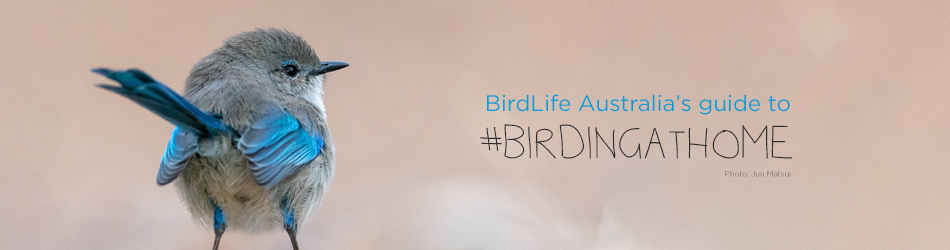
Superb Fairy-wren, male in breeding plumage. Superb Fairy-wren, male in breeding plumage.
Photo: K Vang and W Dabrowka / Bird Explorers © K Vang and W Dabrowka / Bird Explorers

Superb Fairy-wren, female. Superb Fairy-wren, female.
Photo: K Vang and W Dabrowka / Bird Explorers © K Vang and W Dabrowka / Bird Explorers

Superb Fairy-wren, male in eclipse plumage. Superb Fairy-wren, male in eclipse plumage.
Photo: K Vang and W Dabrowka / Bird Explorers © K Vang and W Dabrowka / Bird Explorers

Distribution map of Malurus cyaneus Distribution map of Malurus cyaneus
Map © Birds Australia Birdata

Did you know?

Male Superb Fairy-wrens have been labelled as 'the least faithful birds in the world'. Females may be courted by up to 13 males in half an hour, and 76% of young are sired by males from outside the social group.

Facts and figures

Research Species: Yes
Minimum size: 13 cm
Maximum size: 14 cm
Average size: 14 cm
Average weight: 10 g
Clutch size: 3 to 4

Calls

The Superb Fairy-wren gives a series of high pitched trills, which are given by both sexes. The male often extends these trills into song.

Call in MP3 format (299kb)
Copyright © Fred Van Gessel

Conservation status

Federal - Secure
NSW - Secure

Status of Australian Birds

Superb Fairy-wren

Scientific name: Malurus cyaneus
Family: Maluridae
Order: Passeriformes

Featured Bird Groups
Survey species
Top 40 bird songs
Small insect-eating birds

What does it look like?

Description

Adult male Superb Fairy-wrens are among the most brightly coloured of the species, especially during the breeding season. They have rich blue and black plumage above and on the throat. The belly is grey-white and the bill is black. Females and young birds are mostly brown above with a dull red-orange area around the eye and a brown bill. Females have a pale greenish gloss, absent in young birds, on the otherwise brown tail. The legs are brown in both sexes. Males from further inland and in the south-west of the range have more blue on the back and underparts.

Similar species

Several other species of fairy-wren are found in Australia. The males of each species are quite distinct, but the females and young birds are often difficult to separate. Of the species that overlap in range with the Superb Fairy-wren, the female White-winged Fairy-wren Malurus leucopterus and Red-backed Fairy-wren M. melanocephalus lacks the chestnut colour around the eye, while the female Variegated Fairy-wren M. lamberti has a dull grey-blue wash. Both the Superb and White-winged Fairy-wrens are similar in size. The Variegated Fairy-wren is slightly larger in size and has a longer tail.

Where does it live?

Distribution

Superb Fairy-wrens are found south of the Tropic of Capricorn through eastern Australia and Tasmania to the south-eastern corner of South Australia.

Habitat

Seen in most habitat types where suitable dense cover and low shrubs occur. They are common in urban parks and gardens, and can be seen in small social groups. These groups normally consist of one male and several females and young birds.

What does it do?

Feeding

Superb Fairy-wrens feed on insects and other small arthropods. These are caught mostly on the ground, but may also be taken from low bushes. Feeding takes place in small social groups.

Breeding

The nest is a dome-shaped structure of grasses and other fine material. It is usually placed in a low bush and is constructed by the female. The female incubates the eggs alone, but both sexes feed the young. Other members of the group will also help with the feeding of the young.

References

Higgins, P.J., Peter, J.M. and Steele, W.K. (eds) 2001. Handbook of Australian, New Zealand and Antarctic Birds, Volume 5 (Tyrant-flycatchers to Chats). Oxford University Press, Melbourne.

Pizzey, G. and Knight, F. 1997. Field Guide to the Birds of Australia. Angus and Robertson, Sydney.

Schodde, R. and Tideman, S.C. (eds) 1990. Reader's Digest Complete Book of Australian Birds (2nd Edition). Reader's Digest (Australia) Pty Ltd, Sydney.

Serventy, V.N. (ed) 1982. The Wrens and Warblers of Australia. Angus and Robertson and the Australian Photographic Index of Australian Wildlife, Sydney.

Members